Currently Empty: $0.00
Road Roller Operator Controls and Long-Shift Productivity
Long hours of asphalt compaction can place repeated physical demands on a road roller operator. Each pass requires steady steering, controlled travel speed, and timely use of the vibration system. As the shift continues, repeated movements can become more tiring, especially when controls or visibility points require the operator to stretch, lean, or change position frequently.
Operator comfort depends on how well the station supports these repeated tasks. The seat position, control layout, steering system, vibration controls, and visibility around the drums all influence how easily the operator can work. Controls that are difficult to reach or limited visibility along the drum edge can increase unnecessary movement during long compaction cycles.
Maintaining a practical operating position can help support consistent control throughout the workday. Adjusting the seat before starting, keeping frequently used controls within easy reach, and maintaining clear visibility around the drums can reduce unnecessary physical effort. For extended paving and compaction work, a well-arranged operator station can help the operator maintain steady steering and machine control from the first pass to the last.
Maintain a Clear View of the Work Area
Accurate compaction depends on what the operator can see. Visibility around the drum and along the forward travel path helps the operator hold alignment during each pass. It also makes it easier to track overlap with the previous pass and stay close to edges without drifting off them.
Safety depends on visibility just as much. Road rollers often work near pavers, trucks, other rollers, and ground crews. Operators need a clear view of people, equipment, curbs, drop-offs, and obstacles, both when moving forward and when reversing.
Seat position and operator station layout play a direct role. If the operator has to lean or twist to see the drum edge, posture suffers and accuracy follows. A layout that gives clear sightlines from a normal seated position supports both precision and awareness through the full shift.
Key takeaway: Visibility around the drum and travel path helps operators hold alignment on each pass and stay aware of other machines, workers, edges, and obstacles.
Keep Frequently Used Controls Accessible
A road roller operator uses a small group of controls constantly. Travel, steering, braking, and vibration functions come into play on nearly every pass. How easily the operator can reach them shapes the whole workday.
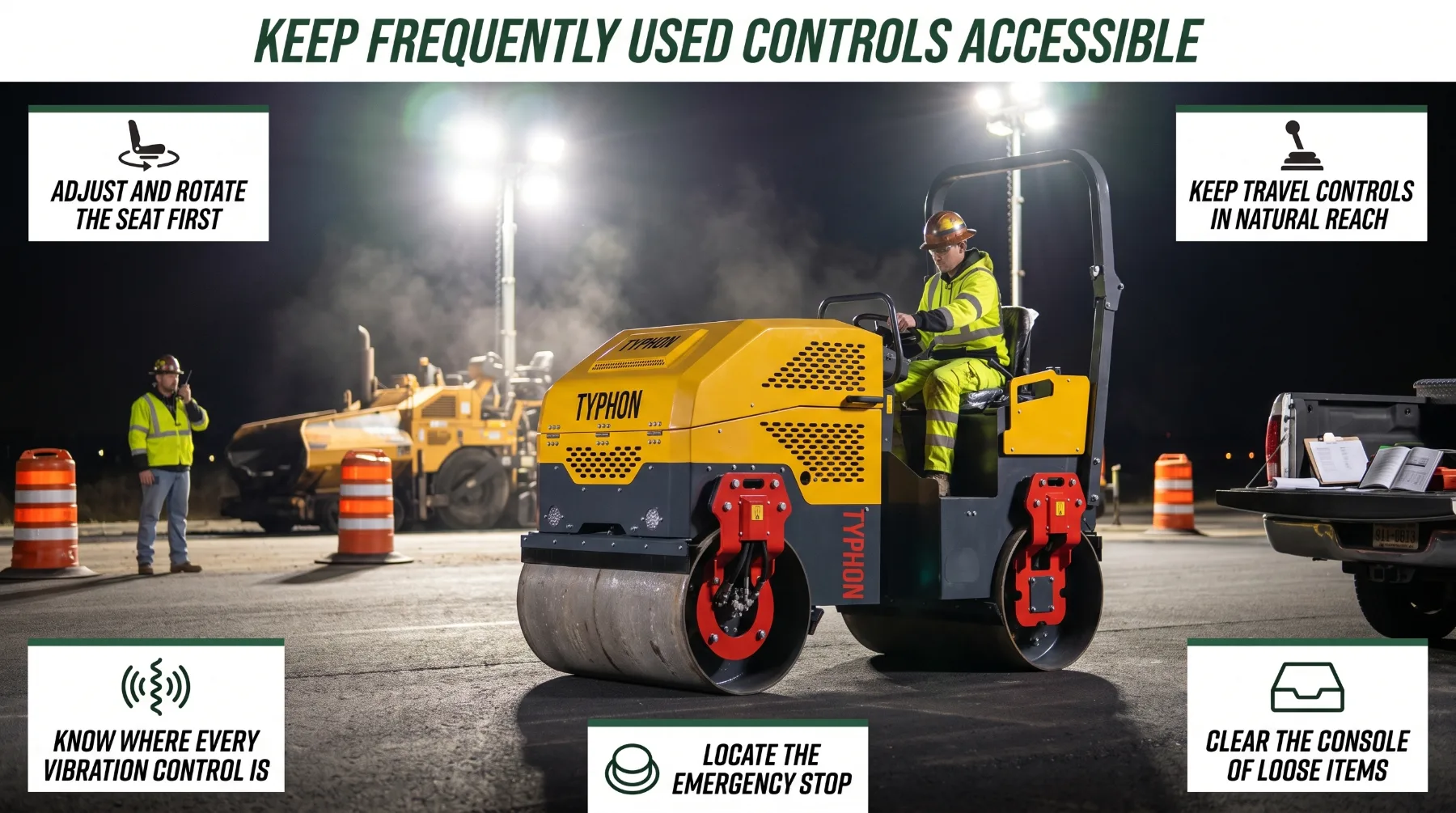
Controls placed within natural reach reduce unnecessary movement. When the travel lever, steering, and vibration switch sit where the hands already rest, the operator can make inputs without shifting position or looking away from the work. That lets attention stay on the compaction path, the drum edge, and the surface ahead.
Poorly placed controls have the opposite effect. Each extra reach pulls focus away from the pass. Over hundreds of repetitions, those small interruptions add up to fatigue, uneven results, and slower progress.
Key takeaway: Travel, steering, braking, and vibration functions are used repeatedly, so controls within natural reach reduce unnecessary movement and keep the operator focused on the compaction path.
Manage Vibration Settings Efficiently
Vibration settings are one of the most important tools a road roller operator controls. Different materials and rolling conditions can call for different settings. Thicker granular layers may benefit from higher amplitude, while thinner lifts and asphalt surfaces often call for lower settings. Vibration is also typically turned off before the roller stops or changes direction to avoid marking the surface.
Because these adjustments happen often, the controls need to be easy to identify and operate. A clearly marked, well-placed vibration control lets the operator switch modes or change settings without pausing the work cycle or looking away from the surface. That keeps each pass smooth and consistent.
Hard-to-find or confusing controls slow the process and increase the chance of errors. Leaving vibration on during a direction change or using the wrong setting on a thin lift can affect surface quality. Always follow the manufacturer's guidance for your machine and the project's compaction requirements.
Key takeaway: Different materials and conditions require different vibration settings, so controls that are easy to identify and operate allow adjustments without disrupting the work cycle.
Maintain Controlled Travel Speed
Travel speed has a direct effect on compaction quality. Consistent movement creates a predictable rolling pattern, and each pass delivers a similar amount of compaction effort to the surface. Uneven speed can leave uneven density across the work area.
Operators need to manage travel speed according to material conditions, pass requirements, and the planned compaction process. Moving too fast reduces the time the drum spends over each section and, with vibration on, lowers the number of impacts per section of surface. Moving too slowly can reduce productivity and, on asphalt, may slow the crew's ability to finish rolling while the mix is still within its workable temperature range.
Responsive, predictable travel controls make this easier. When the operator can set a steady speed and hold it without constant correction, the rolling pattern stays consistent. Smooth starts, stops, and direction changes also help protect the surface from marks and displacement.
Key takeaway: Consistent travel speed creates a predictable rolling pattern, so operators should manage speed according to material conditions, pass requirements, and the compaction process.
Reduce Repetitive Physical Effort
Long shifts on a road roller involve thousands of repeated steering and control inputs. Each one may require little effort on its own, but together they place steady demands on the arms, shoulders, back, and neck. That physical load builds over hours of operation.
A well-arranged operator station can reduce unnecessary reaching and help the operator maintain a stable posture. A supportive, adjustable seat, controls placed near the operator's natural hand positions, and a comfortable steering position all reduce strain. When the body stays supported, the operator can make smoother, more precise inputs.
Comfort connects directly to long-shift productivity. Operators who aren't fighting fatigue stay more alert, hold alignment more accurately, and react faster to changes around the machine. Scheduled breaks remain important, but a well-designed operator station makes the time between them far more manageable.
Key takeaway: Long shifts involve repeated steering and control inputs, and a well-arranged operator station reduces unnecessary reaching and helps the operator maintain a stable posture.
Support a Planned Rolling Pattern
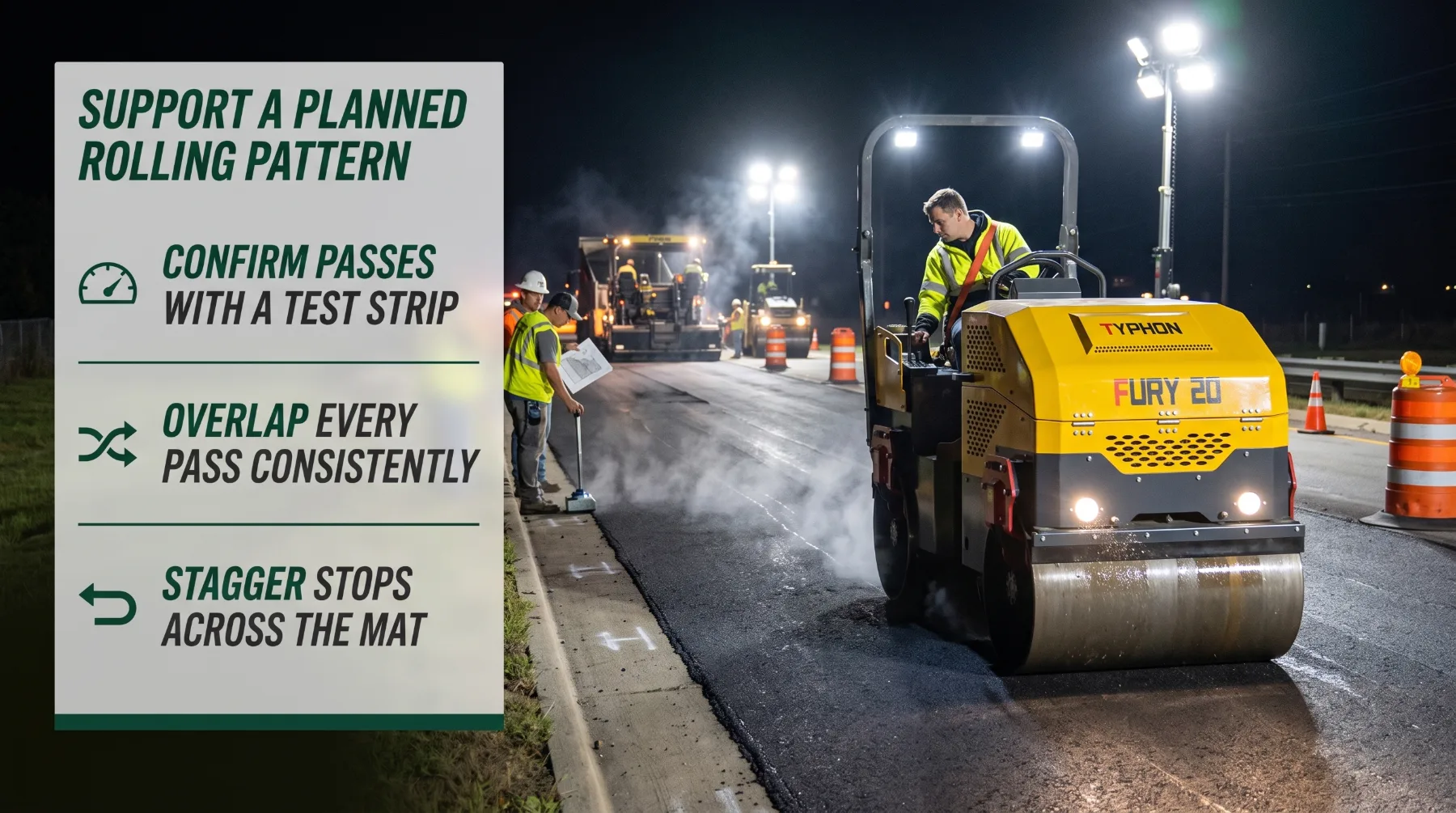
Operator controls are only one part of productivity. Even the best operator station can't make up for a disorganized process. Efficient rolling also requires a planned route, suitable pass overlap, awareness of surface conditions, and proper coordination with other equipment.
A planned rolling pattern keeps the work consistent. Deciding in advance where each pass starts, how much it overlaps the previous one, and where direction changes happen helps the operator cover the area evenly without gaps or excess passes. Staggering stopping and turning points can also help reduce marks on the finished surface.
Coordination ties the process together. Rollers often follow a paver or work alongside other compaction equipment, so the operator needs to know the sequence, spacing, and timing the crew expects. Watching surface conditions throughout and following project specifications for density and uniformity completes the picture.
Key takeaway: Efficient rolling depends on a planned route, suitable pass overlap, surface awareness, and coordination with other equipment, not just well-placed operator controls.
Conclusion
Road roller operator controls directly influence control, visibility, comfort, and consistency during repetitive compaction work. Travel, steering, braking, and vibration controls should remain within natural reach, while clear sightlines to the drum edges, travel path, workers, equipment, and surrounding obstacles support accurate positioning and safe operation. Clearly marked vibration controls allow operators to apply settings suited to the material and conditions, while responsive travel controls help maintain a steady speed and consistent pass pattern. Seat and steering adjustments should support a stable posture and reduce unnecessary reaching during long shifts. Before operation, operators should adjust the workstation, confirm control access and visibility, set appropriate vibration and travel parameters, review the rolling pattern and overlap with the crew, and identify nearby hazards. Following manufacturer operating guidance and project compaction requirements helps maintain controlled operation, consistent density, and reliable productivity throughout the shift.
Frequently Asked Questions
What controls are commonly found on a road roller?
Common road roller controls include steering, travel, braking, vibration, and other operating functions. Travel controls manage direction and speed, while steering keeps the roller aligned with the rolling path. Braking allows smooth and safe stopping. Vibration controls activate the vibratory system and, on many models, adjust settings such as amplitude or frequency for different materials. Depending on the machine, additional controls may operate water spray, lighting, and safety functions. Understanding each control and following the manufacturer's operating guidance helps support accurate, comfortable, and safe operation.
Why is visibility important for road roller operators?
Good visibility helps operators maintain the correct rolling path while monitoring people, equipment, and obstacles. Seeing the drum edges clearly helps maintain alignment, overlap previous passes, and work safely near edges. Forward and rear visibility is also important because rollers frequently change direction around pavers, trucks, other rollers, and ground crews. Clear sightlines help identify curbs, drop-offs, and surface changes early. Adjusting the seat and mirrors before operation allows operators to maintain a clear view from a normal seated position and compact more accurately.
Can control placement affect operator fatigue?
Yes. Poorly positioned controls can require unnecessary reaching during repetitive operation. Road roller operators repeatedly use steering, travel, and vibration controls, so controls placed too far away or at awkward angles can increase strain on the arms, shoulders, and back. Controls within natural reach allow smoother inputs from a stable posture. An adjustable seat and steering position can further improve fit. A well-designed operator station helps reduce unnecessary movement, maintain focus, and support productivity throughout a long shift.
Why does consistent travel speed matter?
Consistent travel speed helps maintain a uniform rolling pattern and compaction result. Moving too fast reduces drum contact time and, during vibration, the number of impacts applied to each section. Moving too slowly can reduce productivity and may make asphalt rolling more difficult while the mix remains workable. Frequent speed changes can also contribute to uneven density. Setting a target speed based on the material and rolling requirements, then maintaining it with smooth control inputs, supports more uniform compaction and helps meet project specifications.